

How to Prepare Floating Docks for Winter?
As summer turns to fall and colder temperatures approach, it’s time for dock owners to start thinking about winter preparations. If you own a floating dock and live in an area where freezing temperatures are common, the risk of ice damage becomes a crisis.
But there are some simple maintenance tips and tricks. As you learn how to prepare floating docks for winter and apply these methods, you can make sure that your dock is secure and protected.
So, how do you prepare your floating docks for winter? We’ll explore everything you need to know in this article, from understanding the importance of winterizing your boat dock to providing practical tips on effectively getting it done.
Follow these guidelines and have peace of mind knowing that your precious waterfront structure is ready for whatever Mother Nature throws its way!
Importance of Winterizing Your Boat Dock
Winter comes with harsh elements that can potentially damage your boat dock. These are the factors that you must consider as a threat to your dock during cold months:
Fluctuating Temperature: During winter, the changing temperatures pose a challenge to your dock’s structural integrity. Wood docks are especially vulnerable as they contract and expand, potentially warping the wooden boards. On the other hand, materials like polyethylene usually remain unaffected by these temperature changes.
Ice Formation: The formation of ice poses threats in different ways. The pressure from ice buildup causes severe damage. At the same time, floating chunks of ice carried by strong currents can crash into your dock or gangway. The impact can result in scratches, scuffs, or even structural harm.
The Water Cycle of Freezing and Thawing: Water levels rise and fall during the cycle of freezing and thawing. In those situations, floating docks may scrape against the lake or pond floor, causing damage. Fixed docks become inaccessible if the water level rises and freezes. The constant freeze-thaw process may also loosen fasteners in certain dock types.
Dangerous Condition: The freezing temperatures create slippery surfaces on your dock. That exponentially increases the risk of accidents and injuries. Safety should always be a top priority, and the dock should be well-stored during these harsh times.
How to Winterize Your Boat Dock
Preparation is key when it comes to winterizing your boat dock, but a lot depends on the type of dock you own. Whether you have a floating dock or a fixed one made of metal or wood, taking the necessary steps will make sure that it lasts longer and is protected against potential damage.
Winterizing Floating Docks
Preparing a floating dock for winter requires some specific steps. Properly following them will contribute to the dock’s longevity and protection against extreme conditions. Here are a few important things you need to do:
- Remove and Store All Accessories: Take off any accessories like ladders, benches, or cleats from your dock. Clean them thoroughly and store them in a dry place.
- Clean Your Dock: Give your floating dock a good cleaning before winter sets in. Remove any debris, algae growth, or other accumulated dirt. They are the causes of damage during freezing temperatures.
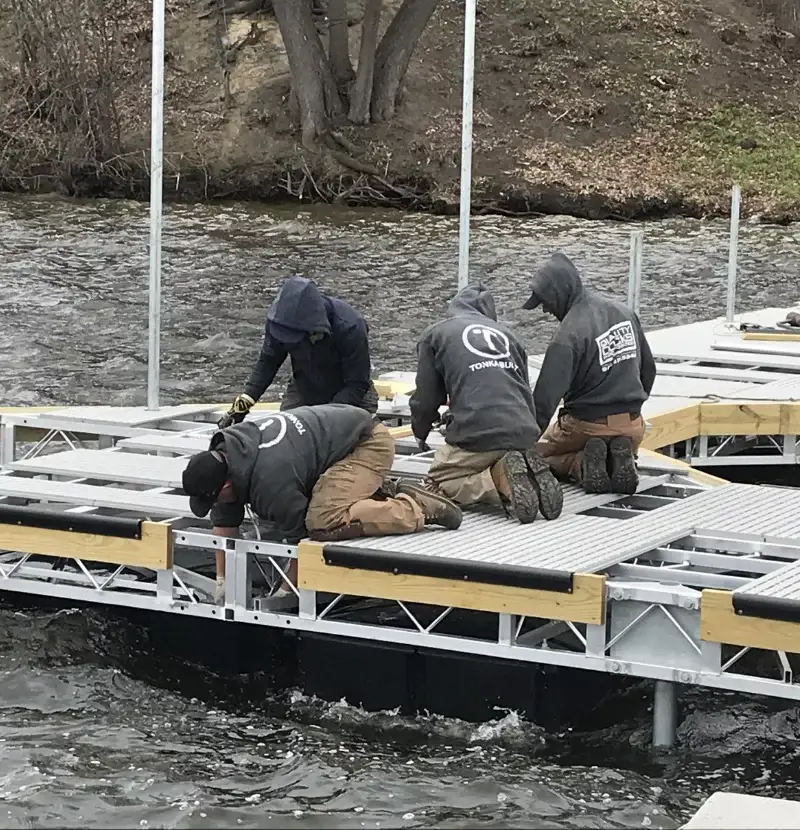
- Remove the Sections: Some floating docks allow for easy removal of individual sections. If this is an option with yours, carefully disconnect and remove each section one at a time according to the manufacturer’s instructions. Store them individually for better upkeep.
- Consider Investing in Wheels: When you invest in wheels for your dock sections, you can easily roll them out of the water without hassle. This feature makes the process easier for next season.
- Store Sections Somewhere Dry: Find an enclosed storage space that’s not humid. Keep the detached sections safe there until spring arrives. Then, it’s time to get back on the water again!
Winterizing Fixed, Metal or Wood Docks
While floating docks require specific considerations for winterization, fixed docks made of metal or wood also need proper care. Here are some essential steps:
- Remove Fixtures and Accessories: Take down any removable fixtures such as benches, ladders, lights, or fishing rod holders. Store them in a dry place to prevent damage from freezing temperatures and ice.
- Use a Bubbler or De-icer: Install a bubbler system under your dock if you live in an area prone to severe freezing. The bubbling action prevents ice formation around the pilings and reduces potential damage.
- Tighten Bolts and Screws: Inspect all bolts and screws on your dock structure before winter sets in. The mechanism tends to loosen due to unpredictable wind storms and their effect on lift-and-pull forces. Tighten any loose connections with appropriate tools.
- Attach Safety Line: Securely attach a safety line from one end of your dock onto a permanent land structure. Must use strong anchors for that. The process will ensure stability against shifting during icy conditions.
- Detachment From the Shoreline Connection Points: It is advised to detach as much of your dock from the shore as possible to minimize ice-related damage to your dock and shoreline. This can be achieved by removing ramps, stairs, or gangways. In case complete displacement is not possible, install a riprap or work with a landscaper to protect the shoreline from erosion.

Tips on How to Prepare Floating Docks for Winter
How you prepare your dock for tough times will determine how well it holds up during the winter. Here are a few important tips to follow: make sure you take the right steps to keep your floating dock working for a long time!
Create a Winterization Plan
Creating a well-thought-out plan will get you the desired results. Start early and gather all the necessary equipment in advance. Choose a dry and secure storage area for your removable dock. Make sure you have enough space to store accessories as well. Consider how you will transport the sections of your floating dock from the shoreline to the storage facility. It’s always helpful to have a friend or two lend a hand during this process.
It’s important that you keep enough time in hand for the whole process. Also, if others share your dock, tell them about your plans ahead of time so they can remove their boats and also provide assistance if needed.
Inspect Your Dock Before and After Winter
Before winter comes, do a check-up on your dock and its accessories. Conduct a visual examination of the dock, gangway, and all other components. Take photos of any existing damages or vulnerable areas to compare with later on.
When you reinstall your dock in the spring, perform another inspection. Try to identify any new changes or damages that may have occurred during winter and work on them.
Consult the Manufacturer’s Manual
Don’t overlook any manuals that come with the dock. It holds important insights and instructions specifically tailored to your floating dock. Take a few moments to flip through its pages. You may find specific winterization tips that can make the process easier for you. From disassembling and reassembling to proper inspection before storage, consulting the manual ensures you make the right decisions.
Check Local Regulations
Before you start winterizing your floating dock, check local regulations. Every region has its own set of guidelines and requirements for dock owners during the winter season.
Some areas ask you to remove the docks by a specific date completely. Some even offer assistance or provide information on proper procedures. Stay informed by reaching out to your marina, municipality, or homeowners association. That way, you can comply with any necessary rules and protect both your dock and property effectively.

FAQs about Winterizing Boat Docks
Q. Can Floating Docks Stay in Ice?
Answer: Leaving a floating dock in ice can be risky. But, there are situations where relocating the dock becomes challenging. It is not advised, but submerging the dock and disconnecting its components in such cases can help protect it.
One suitable option is to tow it to a calm bay without ice shoves or currents. Make sure that all hinged connections are removed, and let each part of the floating dock float independently if feasible.
You can securely tie the dock to a sturdy object or tree onshore that allows for free movement and sinking through the ice. However, for stability, remember to remove anchor chains from the main structure while keeping weights attached.
Leaving your deck in icy water would always increase its risk of damage over time. The lifespan will decrease to a great level after tackling harsh conditions. So, weigh these risks before you decide whether to leave your floating docks to freeze throughout winter.
Q. How Can I Prevent Shoreline Ice Damage?
Answer: Shoreline ice damage is a real concern during the winter months. The forces of nature, such as freezing and thawing currents, can cause “ice heaving” and “ice jacking.” These lead to destructive ice ridges by the shorelines. Take these proactive measures and prevent shoreline damage-
- Remove your dock, gangway, and ramp when winter arrives.
- Collaborate with a landscaping architect and develop an anti-erosion plan for your property.
- Install a seawall or laying stone riprap along vulnerable areas of your shoreline.
- Incorporate soil-stabilizing trees, shrubs, and plants into your waterfront landscaping.
Q. Can I Leave a Dock in the Water over Winter?
Answer: The answer depends on the type of dock you have. For example, step lift docks can withstand icy shorelines and be left in place. They rise higher than typical lift docks and hinge back from the shoreline.
However, if your floating dock can not be securely anchored or located in a safe spot like a small bay or channel, it’s best to remove it for winter storage to avoid potential damage.
Conclusion
Preparing your floating dock for the winter doesn’t have to be difficult. Follow our tips to ensure that it remains in great condition year after year.
Remember, regular inspections and proactive actions will protect it from potential damage caused by ice or harsh weather conditions. Don’t wait until it’s too late! Start preparing now so that when spring arrives, you can get back on the water without any worries.
If you’re looking for high-quality floating docks that are built to withstand even the toughest winters, Tonka Built has got your back here in Minnetonka! Visit our website or contact us today to explore our wide range of durable options!
Leave a Comment
You must be logged in to post a comment.