

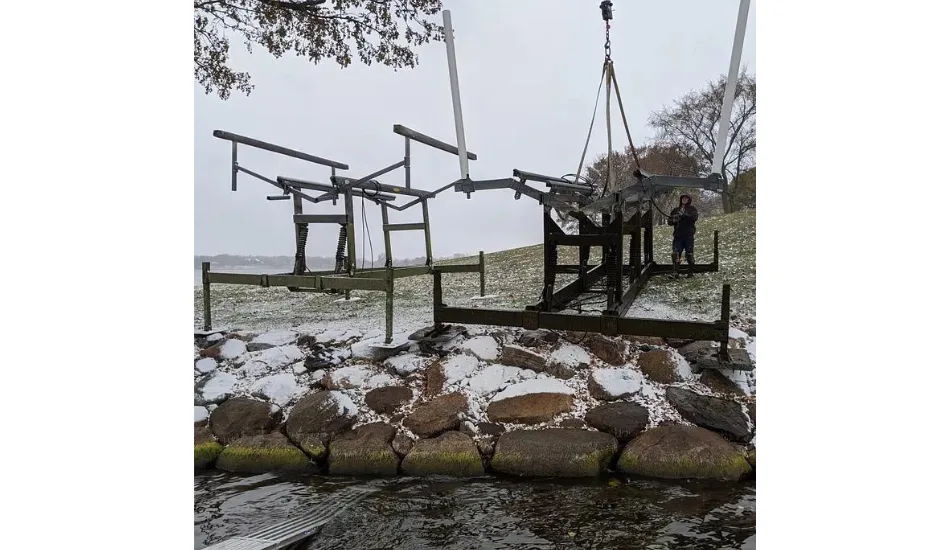
A Thorough Look at the Boat Lift Removal Process
As leaves change color and temperatures drop, our attention turns to boat care. So, whether you’re a seasoned boat owner or new to the waves, understanding this process is key. This article will guide you through each step of the boat lift removal process necessary for a safe, efficient lift removal. Learn why removing your lift is as essential as winterizing your vessel. By the end, you’ll grasp the reasons and techniques for moving your dock and boat lift out of the water when summer’s warmth fades.
What’s the Importance of Boat Lift Removal?
Removing your boat lift is crucial. It protects against weather damage and maintains your lift’s longevity. When winter comes, ice can harm the structure. Regular removal prevents wear and costly repairs. Let’s delve into why this process is so important.
Preventing Damage
Boat lift removal helps prevent damage. Winter ice can twist the frames. It can also bend beams and shafts. Ice can snap cables, too. Removing the lift prevents these issues from happening. It stops rust and corrosion as well.
In the summer, storms may strike. High winds and waves threaten stability. Removing the lift keeps it safe. Making the removal process a habit is better for your equipment. Your lift then lasts for many more seasons.
Boat Maintenance
Removing your boat lift aids in boat maintenance. It gives easy access to inspect your boat’s hull. Without the lift, you can check for abrasions or rust. Cleaning becomes a breeze, too. You can also apply protective coatings effortlessly. Besides, you can look for signs of wear on cables and bunks and swap out any damaged parts. At the same time, you get the chance to fix small problems before they worsen.
Boat lift removal is part of caring for your craft. Maintenance keeps your boat and lift in top shape. So make lift removal a part of your upkeep routine. It supports the longevity of your marine investments.
Preserving Waterfront Aesthetics
Boat lift removal also preserves waterfront aesthetics. During off-seasons, empty boat lifts can look unattractive. They may distract from the natural beauty of the shoreline. Without lifts, the water view is unobstructed and appealing. Docks and lifts should enhance, not spoil, the scenery.
Winter brings a stark, clean look to the lakefront. A clear view aligns with this seasonal beauty. Also, social events benefit from lift removal. Gatherings by the lake look better without idle lifts. It shows care for the lake’s environment and community. So, consider the visual impact. Remove your lift and keep the waterfront pleasing. It shows respect for nature and your neighbors.
Environmental Preservation
Lift removal aids in environmental preservation. It minimizes the impact on water habitats. Docks and lifts can disrupt wildlife when left in place. By removing them, you help protect aquatic ecosystems. It also prevents potential leaks of oils or lubricants and prevents any metal erosion from contaminating the water.
Seasonal removal allows nature to restore itself. It’s a responsible action to sustain the lake’s health, ensuring future generations can enjoy the clean and vibrant waterways. Hence, always think about the lake’s welfare. It shows your commitment to the environment.
Compliance with Laws
Removing your boat lift can keep you within the law. Many areas have strict rules on water structure usage. This includes how and when lifts must be removed. For example, Minnesota requires that boat lifts be out of the water for 21 days before they can be used in another body of water. In California, boat lifts should be removed at the end of the season to ensure safe storage away from the water.
It’s vital to comply with local lake regulations. Failing to do so may result in fines. Authorities set laws to protect the ecosystem and ensure safety. In winter, permanent lifts may create hazards on the ice. Check with your municipality for lift removal dates. Stay informed about local waterfront guidelines. Following these laws is part of responsible ownership. It keeps waterways safe for everyone. Therefore, always prioritize compliance to avoid legal issues.

Preparation Before the Boat Lift Removal Process
Before removing your boat lift, prepare properly. Clear the boat and any dock sections attached. Disconnect the power to the lift. This means unplugging or turning off the electricity.
Gather the necessary tools, like wrenches and a cordless drill. Ensure you have a boat lift removal tool on hand. Don’t forget to check the water level and depth. If it’s deep water, be cautious. Look for any submerged hazards.
Get someone to help you. It’s safer that way. Having an extra pair of hands is invaluable. Also, remember to read the owner’s manual for specific instructions. Double-check all safety guidelines. Make sure you have the right hardware ready. Bolts, chains, and straps must be accessible. Protect yourself with gloves to avoid abrasion.
Preparation makes the removal process smoother and quicker. Prepare everything beforehand for a hassle-free experience.
Step-by-Step Guide to the Boat Lift Removal Process
Ready to remove your boat lift? Here’s your step-by-step guide. Follow these simple steps to ensure a safe boat lift removal.
Assessment and Planning
Begin by assessing your lift and waterfront.
- Look for damage or wear on the lift.
- Decide what tools are needed for the job.
- Determine if you can do this alone or need help.
- Check the weather; choose a calm day.
- Plan your steps in order.
- Secure a place to store the lift.
- Ensure it’s a flat and dry area.
- Gather the right safety equipment. Gloves and non-slip boots are a must.
Planning prevents problems during removal. A smooth process starts with a good assessment. Take your time during this step. It sets up success for the entire removal process.
Disconnecting the Power Source
Turn off the power to the lift and unplug the lift from its energy source. If hardwired, switch off the circuit breaker. Verify there’s no electric current before you proceed. Now, it’s safe to handle wires and cables.
Take care with this part; electricity near water is risky. No power means a safer removal process. Once disconnected, secure the power assembly. Keep it dry and store cords off the ground. With the power off, you’re ready to move on.
Removing the Boat from the Lift
Before lift removal, take your boat off. Do this carefully. Securely attach the boat to your towing vehicle. Slowly drive away from the lift area. Ensure the boat is stable before fully moving. Now the lift is empty and ready.
This step is basic but vital. A clear lift is safer to dismantle. Also, it’s much easier to manage. Without the boat, you handle the lift alone. Then make sure the boat is stored properly. Check that it’s safely placed on supports or a trailer. With the boat secure, focus on dismantling the lift. Your vessel is safe, and so is the path for removal.
Dismantling the Lift
Start dismantling the lift with the canopy. Remove this first. Undo the bolts or straps that secure the cover. Lift it away and place it aside. Next, tackle the beams and cradle. Use the right wrenches for each bolt. A cordless drill speeds up the process.
Disconnect chains or cables carefully. Pay attention to every part you remove. Take apart the frame methodically. Work slowly to avoid dropping hardware in the water. Label parts if it helps with spring assembly. Stack the sections neatly onshore. Dismantling step by step prevents mistakes. A thorough job now means easier installation next season.
Transporting and Storing the Lift Components
After dismantling, transport the lift components carefully. Move each piece to your chosen storage area. Use a cart or dolly for heavy sections. Avoid dragging the parts; this prevents damage. Arrange the components flat and off the ground. Cover them to protect them from dust and rust. Ensure the storage space is dry and secured.
Proper storage prevents confusion during future assembly. It also extends the life of the lift. Stowing lift parts well reduces spring hassle. Now, your lift is safe until it’s needed again. Take care; these steps preserve lift functionality.

What Environmental Considerations Should You Think About?
When removing a boat lift, consider the environment. Proper disposal of old parts is key. Don’t just toss them in a landfill. Check if the parts are recyclable.
Many metal components can be recycled. It’s responsible and eco-friendly. Some parts might need special disposal. Especially if there’s a risk of pollution. Oils and greases must be handled correctly.
You can contact local waste facilities for guidelines. They offer proper disposal or recycling directions. Use their services to dispose of old parts safely. Ensure chemicals don’t end up in the water. This protects the lake and the wildlife within. Always aim for a minimal environmental footprint. Your actions impact the water quality and ecosystem. Doing this safeguards our lakes for future enjoyment.
Should You Hire a Professional or Do It Yourself?
Considering who should handle your lift removal? Here are some points to ponder:
DIY Removal Advantages:
-
- Pride in personal maintenance of your waterfront.
- Savings on service costs.
- Flexibility in scheduling your own time.
Advantages of Hiring a Professional:
-
- Expertise in proper removal techniques.
- Utilizes the right tools and boat lift removal accessories.
- Reduces the risk of damage to your lift.
- Ensures your safety, especially in deep water.
- Complies with local environmental laws.
- Saves time; professionals are efficient.
- Professionals deal with any unexpected issues.
If you want to lean towards ease and reliability, hiring a professional may be wise. They offer peace of mind with expert service. Don’t hesitate to reach out for trained assistance.
Final Thoughts
Boat lift removal is key for equipment longevity and safety. Doing it correctly entails prepping, disconnecting power, and careful dismantling. Remembering environmental and legal obligations is also crucial. Whether you decide to DIY or hire pros, approach removal responsibly.
At Tonka Built, we know the ins and outs of the boat lift removal process. We can handle your lift with precision and respect for the environment. With our professional touch, rest assured that your lift is safe until it’s needed again. Count on us to ensure the beauty of your waterfront and uphold regulations. Together, we help maintain the integrity of your boat lift through seamless removal services. Our team stands ready to support your every need.
Leave a Comment
You must be logged in to post a comment.