


Ultimate Guide to Choosing Right Dock System
When it comes to owning waterfront property or a boat, selecting the right dock system is essential for optimal enjoyment and functionality. A dock system serves as your gateway to endless adventures on the water, providing convenient access for launching and docking boats.
A dock system can be described as an elevated platform that extends over bodies of water such as lakes or rivers. It provides stable footing while facilitating safe boarding and disembarking from boats or other watercraft.
Selecting the correct type of dock is crucial. It influences various factors, including safety measures during use, durability against environmental conditions, ease of maintenance throughout seasons, etc.
But with so many options available in Minnetonka, USA, how to go about choosing right dock system? In this ultimate guide to choosing a dock system, we will cover everything – from the associated factors to the best maintenance tips!
Which Type of Dock System to Consider
Choosing the right dock system starts with assessing your specific needs. Various factors come into play, such as the type of water body you have or the number of boats or watercraft you plan to accommodate.
But one crucial aspect to consider is whether a permanent or removable dock system suits your situation. Permanent docks are securely installed and designed for long-term use. On the other hand, removable docks offer flexibility in terms of expansion and reconfiguration.
Types of Removable Docks
When it comes to removable docks, there are a variety of options available. Let’s explore three popular types: Pipe Docks, Floating Docks, and Piling Docks. Each type has its own advantages and considerations when choosing the right dock system for your specific needs in Minnetonka.
1. Pipe Docks
If you’re looking for an affordable and easy-to-build dock system, Pipe Docks might be the right choice for you. These docks are constructed using aluminum frames with removable docking.
Pipe docks work best in shallow water of up to eight feet deep and should be removed during winter to prevent freezing damage. Since they have minimal contact with the land or water surface, pipe docks are considered environmentally friendly options.
Note that pipe docks are stationary and not designed to adjust to changing water levels as floating dock systems do. In areas where seasonal variations occur, or freezing is common, raising, lowering, or relocating the dock is recommended. That’s because ice and rough currents could potentially damage its components.
Your area may experience harsh conditions such as ice formation or strong currents. Then regularly repairing or replacing pipes’ surface sections may be required occasionally for proper maintenance.
2. Floating Docks
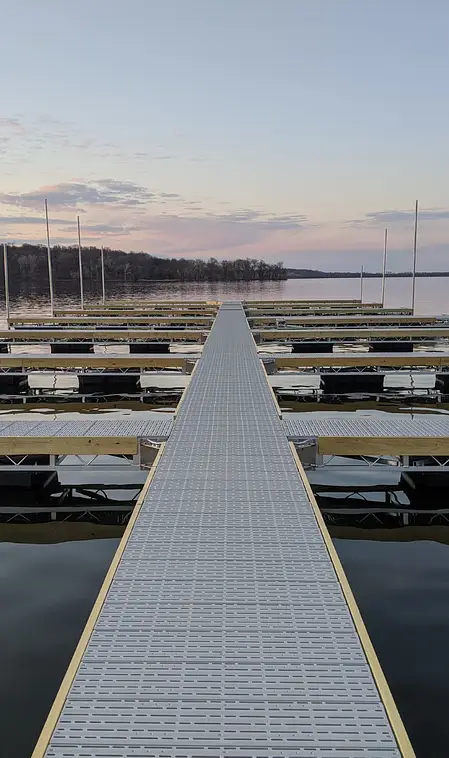
When it comes to versatility, floating docks take the spotlight. These platforms are designed to float on the water’s surface using airtight drums for support. They offer pre-built sections that can be configured in various shapes and sizes, allowing you to adapt them based on your specific needs.
One of the greatest advantages of floating docks is their ability to adjust to changing water levels. This makes them ideal for locations such as sea, lake, or river beds where permanent structures may not be suitable due to varying depths.
Floating docks also require fewer permits compared to fixed dock systems as they minimize sediment damage and don’t disrupt delicate ecosystems beneath. Additionally, the critical electrical systems attached remain safely above water level.
When docking activity is minimal (off-season or severe weather), floating docks can easily be moved and stored in safe locations until needed again. In some cases where wind or currents are minimal during winter months in Minnetonka, they could even remain in place without risk of damage!
3. Piling Docks
If you’re a boat owner with larger watercraft or looking for a fishing dock, piling docks might be the perfect fit. These docks are constructed by inserting sturdy wooden beams called pilings deep into the lake bed or river bottom.
The advantage of piling docks is their strength and stability, making them capable of withstanding strong currents and rough water conditions. They offer excellent support for boats that require more substantial docking structures.
However, it’s important to note that piling docks do have some drawbacks. Firstly, they can be quite expensive to build and maintain due to the materials involved in the construction process. Secondly, unlike floating or adjustable dock systems, they cannot adjust as water levels change since pilings are firmly rooted in place.
To ensure longevity and integrity when building a piling dock system – detailed planning is crucial! Proper treatment of wood posts against rotting should also be considered if using traditional material. Additionally, protecting both pilings from destructive organisms such as worms along caps from harmful UV rays prolongs their lifespan significantly.
Types of Permanent Docks
When it comes to permanent dock systems, there are a few popular options that you can consider. The first type is crib docks and another option is suspension docks. Let’s dive deeper into these types of permanent docks and explore their unique features!
1. Crib Docks
Crib docks are a popular choice for those seeking a stable and durable permanent dock system. These docks consist of wooden frames, known as cribs, that are placed along the bottom and filled with large rocks. The cribs are then covered with decking to provide a sturdy platform.
While crib docks offer excellent stability, they can be quite expensive due to their custom-built nature. It’s important to note that some areas may have restrictions on installing crib docks due to their potential impact on water flow and wildlife habitats.
Although crib docks provide long-lasting durability, they lack the convenience of easy removal or extension like other types of dock systems. Additionally, they can disrupt natural water flow along shorelines, which may pose environmental concerns in certain cases.
2. Suspension Docks
For those seeking a modern and visually appealing dock system, suspension docks are worth considering. These docks hang over the water using cables and anchorage, resulting in a sleek design that has minimal impact on the surrounding environment. However, you should know that suspension docks can be quite costly and time-consuming to install due to their engineering requirements.
Unlike floating dock structures which can be removed during severe weather conditions, suspension docks are stationary and susceptible to damage from strong winds or water swells. Also, if your dock is constructed with wood or aluminum materials rather than durable plastics, replacing damaged sections may incur higher costs.

Factors to Consider When Choosing Right Dock System
Making the decision of which dock system is right shouldn’t be taken lightly. With so many options available, it’s easy to feel overwhelmed. But fear not! By considering certain factors such as water levels, shoreline conditions, and specific needs like boat traffic or customization preferences, you can narrow down your choices significantly.
Budget
When considering the right dock system for your waterfront property, it’s essential to establish a budget. Keep in mind that different types of docks come with varying costs based on their structure and size.
For those looking for more affordable options, floating docks made from pre-made plastic materials can be a cost-effective choice. On the other hand, if you’re willing to invest more upfront, piling docks may offer greater stability but come at a higher price due to the excavation required for their foundation.
Number of Water Vessels
One important factor to consider when choosing the right dock system is the number of water vessels you own and plan to dock. The size and type of your boats, as well as any jet skis or other watercraft, will determine the appropriate size and capacity of your dock.
For example, if you have multiple large boats that require a significant amount of space, opting for a larger dock with ample deck area would be ideal. On the other hand, if it’s primarily smaller watercraft like jet skis or kayaks in your collection, a more compact floating dock system may suffice.
Laws and Regulations
Lake docks are subject to construction laws due to their impact on the environment and residential areas. Before starting any construction, you must clear it with relevant authorities who will inspect the site for compliance with the conditions.
Moreover, if there is potential for commercial use of your dock in the future, additional licensing may be required. It’s important to clarify whether your dock will remain private property or if you have plans for commercial activities down the line.
Changes in the Weather and The Seasons
It’s important to consider the prevailing weather conditions and seasonal changes in your area if you want to get the dock that suits you best! For regions with harsh winters or frequent freeze-overs, opting for a dock that can withstand freezing temperatures is crucial. Stationary docks or those made from durable materials like aluminum provide better resistance against ice damage.
In hurricane-prone areas, selecting a sturdy option such as piling or crib docks becomes imperative as they offer increased stability during stormy weather. On the other hand, if you reside in calmer areas without extreme weather fluctuations, floating docks or wood-based structures may suffice to meet your needs.
Depth of the Water
Different types of docks have different requirements in terms of water depth. For shallow waters found in residential areas, floating docks or pipe docks are suitable options as they can be easily adjusted to accommodate changing water levels. These types provide flexibility and convenience for smaller boats and personal watercraft.
On the other hand, if you have deeper waters or plan on docking larger vessels, piling or crib docks may be necessary. These structures require a solid foundation on the lake bottom and are more commonly seen in commercial harbors where freight ships access deeper waters with larger dock systems.
Location of Installation
The location of your waterfront property plays a significant role in determining the type and size of the dock system you can install. If you live in a strictly residential community with close neighbors, commercializing your dock may not be viable. However, if you have ample waterfront space on your property, there could be potential for setting up a larger dock that allows for rental opportunities to others.
Considering the location helps determine whether additional permits or permissions are required before installation. It’s also crucial to assess factors such as water depth and shoreline conditions that might influence which type of dock is suitable for your specific site.
Frequency of Use
The frequency at which you use your dock has a great impact. If you’re in an area where boating is popular and frequently entertains guests, a larger dock may be necessary to accommodate friends and family.
Moreover, if you rely heavily on boats for various errands or enjoy regular water activities, opting for a durable dock like crib docks or piling docks would be ideal. These types of docks are designed to withstand daily usage without frequent repairs or structural issues that could hamper your waterfront experience.
Materials
Different materials offer various benefits in terms of durability, maintenance, and aesthetics, so choose wisely! One option is a wood dock, which provides a classic look and can be suitable for those seeking natural elements. On the other hand, aluminum docks are known for their longevity and resistance to corrosion in both freshwater and saltwater environments.
In some cases, you may even opt for hybrid docks that combine the best features of different materials. For example, choose wood decking with an aluminum frame for added strength or aesthetic appeal.
It’s worth considering the availability of materials as well. While you might prefer one type (like aluminum), it’s essential to check if it’s readily accessible in your area before finalizing your choice.
How to Choose the Best Boat Dock
After considering all these factors, you still need to choose and install the best possible dock system. Here are some tips to guide you-
1. Inspect the quality: Ensure you personally inspect the materials used for your dock system. Buy from reputable suppliers, and if importing, seek feedback from previous buyers for authenticity.
2. Seek expert assistance: Hiring a professional dock builder may come at a cost. But it is worth it in terms of expertise and guidance throughout the process. They can help with design plans, material selection, sourcing, and construction.
3. Secure proper insurance: Once your dock is constructed, consider acquiring adequate insurance coverage specifically tailored to waterfront properties. Incorporating docks into an existing policy will protect against potential damages or liabilities.
4. Add personal touches with accessories: Consider enhancing comfort by incorporating various accessories such as lighting systems for evening usage or shades with seating areas on hot summer days. You can even go all out and transform your dock into a relaxing spot with gazebos; just make sure to stick within budget limitations.
Safety Considerations
Safety should always be a top priority when it comes to choosing and operating a dock system. Here are some key considerations:
- Heat: Aluminum docks can become extremely hot, posing the risk of burns. Opt for materials like polyethylene that stay cooler in direct sunlight.
- Splintering and Decay: Wooden docks may rot or splinter over time, causing potential harm to bare feet. Regular maintenance is necessary to prevent damage and ensure safety.
- Slippery Surfaces: Moisture from rain or water activities can make dock surfaces slippery, increasing the risk of falls. Choose slip-resistant materials like polyethylene decking for added safety.
Plastic floating docks, such as those made from durable polyethylene, offer several advantages in terms of safety compared to traditional wooden or metal options. Their non-slip surface ensures traction even when wet. They also eliminate concerns about splinters harming bare feet while providing comfort underfoot, even on scorching summer days.
Keep these safety considerations in mind as you explore different dock systems so you can choose one that prioritizes both enjoyment and protection for all users.
Dock Maintenance Tips
To ensure your dock system remains in top condition and lasts for years to come, here are some essential maintenance tips to follow:
- Regular inspections: Take the time to inspect all components of your dock system at least once a week, paying close attention to joints, fasteners, decking materials, and bolts. This is especially important after storms or harsh weather conditions.
- Keep it clean: Contrary to popular belief that docks self-clean due to their proximity to water, regular cleaning is necessary. Remove any debris or dirt buildup from the deck surface on a routine basis.
- Aluminum care: If you have aluminum parts on your dock system that become dull over time due to calcification (commonly found near saltwater), create a baking soda paste and gently scrub away the buildup for restored luster.
- Address wood rot immediately: Should you notice any signs of wood rot on your wooden deck boards, promptly replace them with new ones while ensuring proper sealing by applying paint before installation.
- Danger-free environment: Hammer down any loose planks as soon as they’re spotted; this will prevent tripping hazards and possible injuries around the dock area.
- Take pictures regularly: In this way, you can help track changes over time. Small details might stand out when comparing photos side by side.
Conclusion
Choosing the right dock system is a decision that should not be taken lightly. By considering all the factors we’ve discussed, you can find the ideal dock that suits your specific situation.
At Tonka Built, we understand how important it is to have a reliable and functional docking solution for your waterfront property or boat. We ensure commitment to superior decking materials and an experienced docking crew with customer-centric values in mind. We are here to assist you every step of the way.
Don’t hesitate! Reach out to us today for a consultation on creating the perfect custom-designed dock system. Enjoy stability and durability while enhancing your good times at Lake Minnetonka and its surrounding areas.
Remember – making sure you choose the right dock system ensures many years of safe boating adventures!
Leave a Comment
You must be logged in to post a comment.