

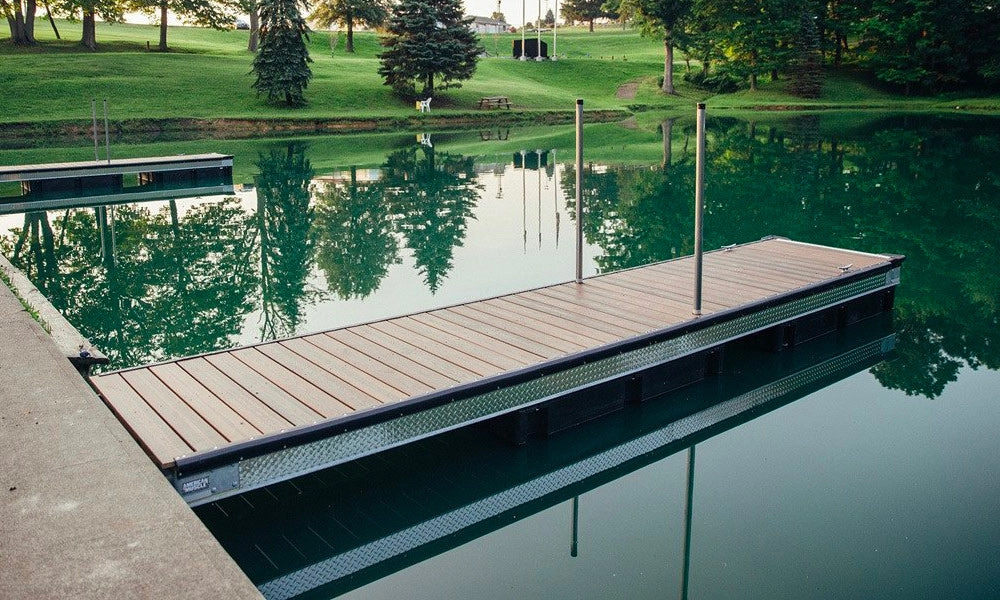
4 Easy Ways to Stabilize Your Floating Dock
Floating docks are popular accessories that enhance waterfront recreation activities. Unlike conventional fixed docks that are permanently anchored on the seabed, floating docks are versatile and easier to maintain. The stability of your floating dock significantly impacts safety and longevity. Therefore, it’s essential to understand how to stabilize floating dock. Here’s how.
1. Elastic Mooring
Elastic mooring is a passive system that uses flexible cables that adapt to water fluctuations. The size and number of elastic cables depend on the size and weight of your floating dock. Typically elastic systems stretch and contract based on the water level and tides. The systems have constant downward tension on your dock, making it stable regardless of changes in water levels.
The cable system’s strength and elasticity ensure optimum storm performance since it can absorb abrupt and violent movements. In extreme weather conditions, a solid bypass system anchors the dock before the elastic cable breaks due to high pressure. However, most elastic mooring systems can withstand severe hurricanes.

2. Cable and Winch System
Cable and winch systems offer more flexibility to deal with different water level conditions. You can adjust the tension and length of the cables using the winch system to match water level fluctuations.
However, the system requires active management to maintain optimum stability. If you live in an area that experiences extreme water level fluctuations, you need to adjust the system manually as the conditions change. When the pressure on some cables increases, the lines may twist, posing problems with helical anchors that don’t have swivels.
If the swivels don’t match the weight of your dock, the anchor is likely to twist and snap. However, you can avoid this issue by ensuring appropriate attachment hardware to reinforce the anchor and cables.
High water tides can cause excess tension on the lines, leading to anchor movements. Therefore, it’s vital to ensure the pull angle is small. You can achieve shallow angling by moving the anchors away from the dock. Leaving extra slack on the cables can help minimize the tension and pressure on your dock. However, this can increase dock movements, especially when under significant loads.
3. Chain and Anchor Floating Dock Stabilizer
Chain and anchor stabilizers are among the most budget-friendly and durable dock anchoring options for anyone wondering how to stabilize a floating dock.
This system uses concrete anchor blocks or DIY drum anchors, but helical anchors are the best. Most helical anchors screw in the seabed, unlike other anchors that are suspended near the seabed.
You should consider geotechnical features and the size and weight of your dock when choosing the ideal chain floating dock stabilizer. The scope and length of the chain are critical in determining the effectiveness of this anchoring system. A chain and anchor floating dock stabilizer utilizes the weight of the suspended chain and anchor resistance to maximize stability and limit the lateral movement of your dock. Therefore, water depth is a vital aspect that impacts performance and effectiveness.
When the system is installed in shallow waters, the chain holds less weight, making it less stable. As a result, the system is difficult to use when fluctuations between high and low water levels are significant.
4. Pile Restraint
Pile-restrained dock systems are more effective in limiting lateral movements, and the stability is almost similar to fixed dock systems. Most coastal dock systems often use pile-restrained stabilizers due to prevailing sea conditions. While the pile system can be used on any dock, it offers the best results in concrete pontoons that require higher stability.
Environmental factors and water height can pose significant limitations to a pile-restrained floating dock stabilizer. In areas that experience extreme fluctuations in water levels, the necessary piles may be impractical to implement –and unappealing.
In addition, pile restrains installation may significantly impact aquatic ecosystems in seasons when the species are most vulnerable. The soil conditions determine the embedment and drivability of pile restraint systems. Similarly, ice jacking is a critical consideration when determining the suitability of pile restraint systems in cold areas.
Conclusion: How to Stabilize a Floating Dock
Floating docks are convenient and flexible installations that revolutionize waterfront recreation. However, safety is a critical factor, making it essential to know how to stabilize a floating dock.
While anchoring a floating dock may not be complex, it requires meticulous planning and professional installation. If you have any inquiries about floating dock installations, repairs, and anchoring, contact Tonka Built experts, and we’ll be happy to help.
Leave a Comment
You must be logged in to post a comment.